A cracked heat shield, a leaking rocket, a moon lander that barely exists, a workforce being cut, and four astronauts just waiting. Here is every reason, with receipts.
1. the rocket is on the launchpad. again. for the second time.
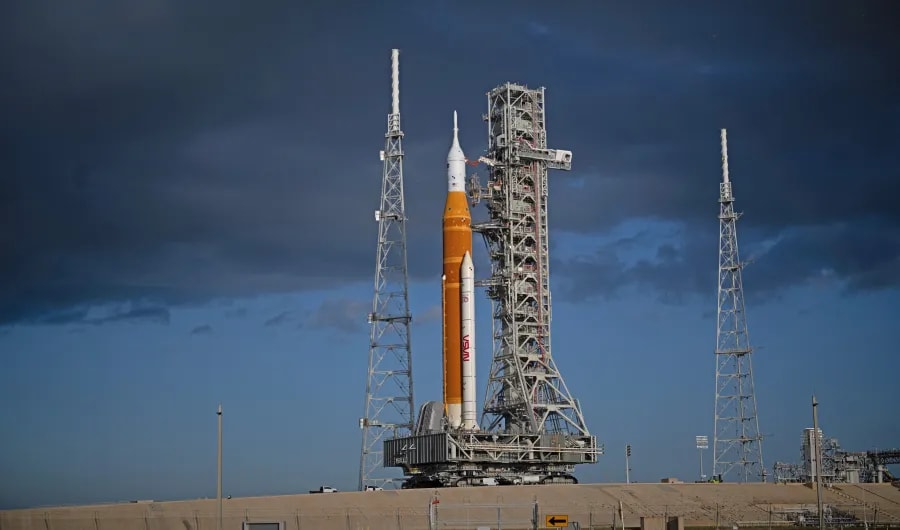
The Artemis II SLS rocket and Orion spacecraft arrive at Launch Pad 39B on March 20, 2026, after an 11-hour, 4-mile journey from the Vehicle Assembly Building. This was its second rollout. Credit: NASA
On March 20, 2026, NASA's 322-foot Space Launch System rocket finished a slow, 4-mile crawl to Launch Complex 39B at Kennedy Space Center. It moved at a maximum speed of 0.82 mph. It took 11 hours. It was the second time this rocket has made that trip.
The first rollout happened in January 2026. The rocket was rolled back on February 25 after engineers found a helium flow problem in the upper stage during a fueling rehearsal. NASA announced on March 3 the specific culprit: a faulty helium seal. Teams repaired it in the Vehicle Assembly Building, replaced batteries in the flight termination system, and ran end-to-end safety checks. Launch is now targeting no earlier than April 1, 2026. That date has already slipped once since the February rollback. The program is currently targeting launch windows across April, but there is no guarantee any of those hold either.
NASA is also losing workers and money at the same time
While engineers were fixing the helium seal and preparing for a third rollout attempt, NASA was simultaneously dealing with a separate crisis. The agency has lost thousands of workers since late 2024 through a combination of layoffs, offered buyouts, and a culture of uncertainty created by federal workforce reductions. The UPI analysis from March 2026 listed the Artemis program's predicament alongside "turnover in top leadership positions" and "departures of thousands of NASA workers" as compounding factors in the program's overall instability.
Each SLS launch costs more than $2 billion when the rocket, Orion, and ground infrastructure are included. The mobile launcher platform that the SLS sits on during rollout cost $26 million to repair after Artemis I, five times the $5 million budgeted. The program's costs have been a persistent target for critics, and future funding under the current budget environment is not guaranteed. NASA administrator Isaacman acknowledged in the February 27 restructuring announcement that the agency needed to "rebuild core competencies" and "strengthen the workforce" to sustain the new accelerated launch cadence he was proposing.
 ifiokambrose

1 Comments
NASA is also losing workers and money at the same time
While engineers were fixing the helium seal and preparing for a third rollout attempt, NASA was simultaneously dealing with a separate crisis. The agency has lost thousands of workers since late 2024 through a combination of layoffs, offered buyouts, and a culture of uncertainty created by federal workforce reductions. The UPI analysis from March 2026 listed the Artemis program's predicament alongside "turnover in top leadership positions" and "departures of thousands of NASA workers" as compounding factors in the program's overall instability.
Each SLS launch costs more than $2 billion when the rocket, Orion, and ground infrastructure are included. The mobile launcher platform that the SLS sits on during rollout cost $26 million to repair after Artemis I, five times the $5 million budgeted. The program's costs have been a persistent target for critics, and future funding under the current budget environment is not guaranteed. NASA administrator Isaacman acknowledged in the February 27 restructuring announcement that the agency needed to "rebuild core competencies" and "strengthen the workforce" to sustain the new accelerated launch cadence he was proposing.