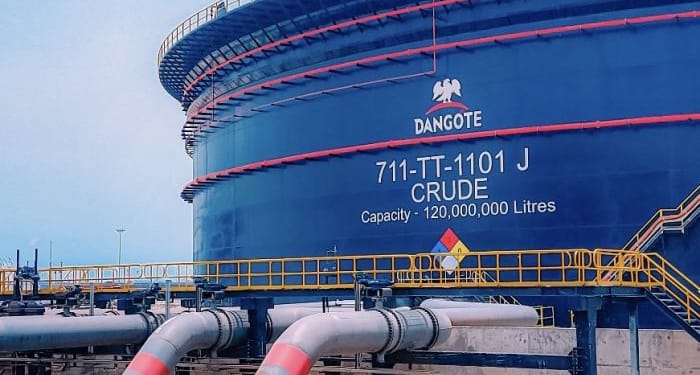
The Dangote Refinery was always described as a game-changer for Nigeria. Nobody predicted it would become a lifeline for the entire continent.
When the US and Israel launched Operation Epic Fury on February 28, striking Iran's military infrastructure and closing the Strait of Hormuz to tanker traffic, the immediate conversation was about oil prices, geopolitics and the Middle East. What received less attention was what was happening quietly, urgently, in government offices from Pretoria to Nairobi.
Africa was running out of fuel, and it had very few places left to turn.
According to the International Energy Agency, about 600,000 barrels per day of petroleum products typically destined for Africa from the Middle East are now at risk, as tanker traffic through the Strait of Hormuz has slowed to a trickle. For some countries on the continent, those cargoes do not supplement demand. They effectively are demand.
Dangote has already announced plans to expand the refinery's capacity from 650,000 barrels per day to 1.4 million. That expansion, if completed, would make it not just Africa's largest refinery but one of the largest in the world, with export capacity that could fundamentally reshape where the continent sources its fuel.
The 12-month supply contract South Africa is negotiating with Nigeria, if signed, would be the first of its kind, a government-to-government fuel supply arrangement between two African nations, bypassing the Middle East trade route entirely. If other countries formalise similar arrangements, it could represent the beginning of an intra-African energy market that has been talked about for decades but never materialised.
Whether that happens will depend on whether Africa treats this crisis as a warning or simply as a problem to be managed until the war ends and the tankers start moving again.
History suggests the latter. The evidence of the past three weeks suggests the continent may not have that luxury much longer.
1 Comments
What Comes Next
Dangote has already announced plans to expand the refinery's capacity from 650,000 barrels per day to 1.4 million. That expansion, if completed, would make it not just Africa's largest refinery but one of the largest in the world, with export capacity that could fundamentally reshape where the continent sources its fuel.
The 12-month supply contract South Africa is negotiating with Nigeria, if signed, would be the first of its kind, a government-to-government fuel supply arrangement between two African nations, bypassing the Middle East trade route entirely. If other countries formalise similar arrangements, it could represent the beginning of an intra-African energy market that has been talked about for decades but never materialised.
Whether that happens will depend on whether Africa treats this crisis as a warning or simply as a problem to be managed until the war ends and the tankers start moving again.
History suggests the latter. The evidence of the past three weeks suggests the continent may not have that luxury much longer.