The Dangote Refinery was always described as a game-changer for Nigeria. Nobody predicted it would become a lifeline for the entire continent.
When the US and Israel launched Operation Epic Fury on February 28, striking Iran's military infrastructure and closing the Strait of Hormuz to tanker traffic, the immediate conversation was about oil prices, geopolitics and the Middle East. What received less attention was what was happening quietly, urgently, in government offices from Pretoria to Nairobi.
Africa was running out of fuel, and it had very few places left to turn.
According to the International Energy Agency, about 600,000 barrels per day of petroleum products typically destined for Africa from the Middle East are now at risk, as tanker traffic through the Strait of Hormuz has slowed to a trickle. For some countries on the continent, those cargoes do not supplement demand. They effectively are demand.
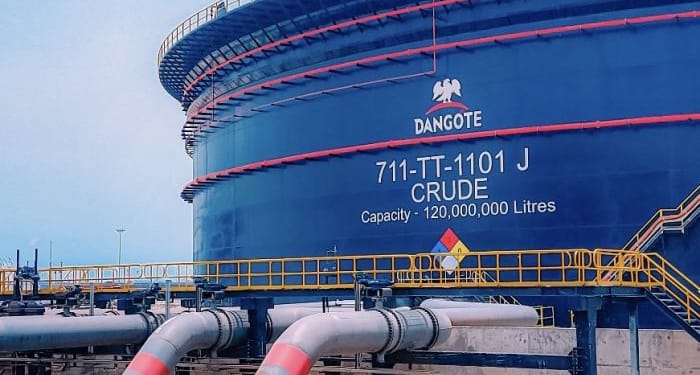
For years, Aliko Dangote's $21 billion refinery on the Lekki Peninsula was treated with a mixture of admiration and scepticism. It was the largest single private investment in African history. It was also, depending on who you asked, perpetually behind schedule, perpetually over-budget and perpetually about to change everything without quite doing so.
Then it started running. The 650,000-barrel-per-day facility reached full designed capacity in February 2026, making it one of the largest refineries in the world. It ended Nigeria's decades-long absurdity of being a major oil producer that imported its own refined fuel. It became a price determiner in the domestic market. And now, as the Middle East burns, it has become something else entirely, a critical fuel lifeline for nations scrambling to keep their economies moving.
Dangote Petroleum Refinery and Petrochemicals has been approached by South Africa and other governments in the region, as well as from countries outside the continent, a company executive said. Ghana and Kenya have also approached the company for supplies.
Dangote himself, in an interview with The Economist, was characteristically direct. "Right now it is not about pricing, it's about availability," he said. "I think the situation will continue for a while."
To understand why African governments are scrambling, you have to understand what the continent did, or rather failed to do, over the previous two decades.
Africa, which accounts for about 7% of the world's crude output, had seen its refining capacity shrink by about a third in the past two decades before Dangote's facility came online. Refineries that should have been maintained were abandoned. Plants that could have been upgraded were shuttered after accidents or left to decay because they could not meet cleaner-fuel standards. Governments found it cheaper and easier to import refined products from the Persian Gulf than to build and run the infrastructure to produce their own.
The result was a continent deeply vulnerable to exactly what is now happening, a situation where a geopolitical conflict thousands of kilometres away translates almost instantly into economic pressure for African households and governments.
Data from Kpler shows that petroleum product loadings bound for Africa fell sharply from 580,000 metric tonnes in January to just 183,000 metric tonnes in February, a collapse of 68.4 per cent. By March, volumes had plunged to zero, marking a complete breakdown in supply flows within a single quarter.
The vulnerability is not evenly distributed, but it is alarmingly widespread.
South Africa presents perhaps the starkest case study in how badly this can go. The country has lost about half its refining capacity in recent years after accidents and years of underinvestment left plants unable to meet cleaner-fuel standards. Its remaining refineries meet less than half of 612,000 barrels a day of domestic demand. Saudi Arabia was its second-biggest oil supplier as recently as 2024. The situation has been further complicated by the shutdown of Glencore-owned Astron Energy's 100,000-barrel-a-day Cape Town refinery for maintenance, with production not expected to resume until April.
Jacob Mbele, director-general at South Africa's Department of Mineral Resources, chose his words carefully when speaking to Bloomberg from Cape Town. "We're looking everywhere for supply options," he said. "We're comfortable that in the coming weeks or so, we are safe. The situation is fluid, it changes every day."
"The coming weeks or so" is not a phrase that inspires confidence. South Africa is now seeking a standard 12-month supply contract with Nigeria.
Kenya's situation is more immediately precarious. The country consumes about 100,000 barrels of fuel every day and imports all of it. It requires importers to hold just 21 days of stock, leaving it vulnerable to the loss of even a single shipment. Martin Chomba, chairman of the Petroleum Outlets Association of Kenya, confirmed the strain is already visible at street level. "The biggest suppliers are rationing product, and some distributors are experiencing stock-outs in rural areas," he said.
Ethiopia has moved to demand-side management. Prime Minister Abiy Ahmed has urged citizens to curtail fuel usage, directing available resources toward essential services and emphasising that consumption must now be prioritised for "basic and essential needs." For one of East Africa's largest economies, that is an extraordinary public admission.
The Uncomfortable Position Nigeria Finds Itself In
There is an irony in all of this that has not been lost on observers in Lagos. Nigeria, a country that spent decades importing its own petrol back from European refineries, that endured chronic fuel queues under successive administrations, that subsidised pump prices to the tune of billions, now finds itself in the unprecedented position of being the continent's energy anchor.
Dangote's refinery is emerging as a rare bright spot. The plant outside Lagos has been ramping up to full capacity since starting operations in 2024. Nigeria is now well positioned to meet domestic fuel demand of about 493,000 barrels a day with surplus volumes available for export. It also holds weeks of stock, giving it a buffer that few other countries on the continent can match.
But the position is not without its own complications. Fuel prices in Nigeria have risen sharply since US-backed attacks on Iran drove a surge in global oil prices, with the Dangote Refinery temporarily suspending the loading of petrol for sale to retailers. The refinery has relied on foreign producers for some of its feedstock, and higher crude oil prices have fed directly into what Nigerians pay at the pump. Dangote has raised its prices more than once since the war began.
For Nigerians who were promised that domestic refining would mean affordable fuel, the sight of prices rising during a global crisis even as their country becomes a supplier to the continent is a difficult thing to explain.
No African country is a member of the International Energy Agency, which requires member states to hold at least 90 days of net oil import reserves. That single fact throws the continent's exposure into sharp relief. Many of the countries now scrambling for supply are operating on three weeks of stock. Some on less.
Securing fuel will be harder for developing nations, as richer buyers may be able to outbid them. The IEA, the European Union, Japan and South Korea all have strategic reserves, established relationships with alternative suppliers and the fiscal capacity to pay premium prices in a tight market. African governments have none of these advantages at scale.
Energy consultancy CITAC's Elitsa Georgieva has been warning about this structural dependence for years. The numbers she cited are now unavoidable: the two regions of east and southern Africa receive about 75% of their fuel imports from the Middle East. That is not a supply chain. That is a single point of failure.
Energy experts warn that unless African countries accelerate investments in domestic refining capacity and diversify supply sources, similar shocks could recur with increasing frequency and severity, each time amplifying economic shocks across the continent.
Dangote has already announced plans to expand the refinery's capacity from 650,000 barrels per day to 1.4 million. That expansion, if completed, would make it not just Africa's largest refinery but one of the largest in the world, with export capacity that could fundamentally reshape where the continent sources its fuel.
The 12-month supply contract South Africa is negotiating with Nigeria, if signed, would be the first of its kind, a government-to-government fuel supply arrangement between two African nations, bypassing the Middle East trade route entirely. If other countries formalise similar arrangements, it could represent the beginning of an intra-African energy market that has been talked about for decades but never materialised.
Whether that happens will depend on whether Africa treats this crisis as a warning or simply as a problem to be managed until the war ends and the tankers start moving again.
History suggests the latter. The evidence of the past three weeks suggests the continent may not have that luxury much longer.
7 Comments
The Refinery Nobody Took Seriously Enough
For years, Aliko Dangote's $21 billion refinery on the Lekki Peninsula was treated with a mixture of admiration and scepticism. It was the largest single private investment in African history. It was also, depending on who you asked, perpetually behind schedule, perpetually over-budget and perpetually about to change everything without quite doing so.
Then it started running. The 650,000-barrel-per-day facility reached full designed capacity in February 2026, making it one of the largest refineries in the world. It ended Nigeria's decades-long absurdity of being a major oil producer that imported its own refined fuel. It became a price determiner in the domestic market. And now, as the Middle East burns, it has become something else entirely, a critical fuel lifeline for nations scrambling to keep their economies moving.
Dangote Petroleum Refinery and Petrochemicals has been approached by South Africa and other governments in the region, as well as from countries outside the continent, a company executive said. Ghana and Kenya have also approached the company for supplies.
Dangote himself, in an interview with The Economist, was characteristically direct. "Right now it is not about pricing, it's about availability," he said. "I think the situation will continue for a while."
The Wound Decades in the Making
To understand why African governments are scrambling, you have to understand what the continent did, or rather failed to do, over the previous two decades.
Africa, which accounts for about 7% of the world's crude output, had seen its refining capacity shrink by about a third in the past two decades before Dangote's facility came online. Refineries that should have been maintained were abandoned. Plants that could have been upgraded were shuttered after accidents or left to decay because they could not meet cleaner-fuel standards. Governments found it cheaper and easier to import refined products from the Persian Gulf than to build and run the infrastructure to produce their own.
The result was a continent deeply vulnerable to exactly what is now happening, a situation where a geopolitical conflict thousands of kilometres away translates almost instantly into economic pressure for African households and governments.
Data from Kpler shows that petroleum product loadings bound for Africa fell sharply from 580,000 metric tonnes in January to just 183,000 metric tonnes in February, a collapse of 68.4 per cent. By March, volumes had plunged to zero, marking a complete breakdown in supply flows within a single quarter.
Zero. Not reduced. Zero.
Country by Country, the Picture Gets Worse
The vulnerability is not evenly distributed, but it is alarmingly widespread.
South Africa presents perhaps the starkest case study in how badly this can go. The country has lost about half its refining capacity in recent years after accidents and years of underinvestment left plants unable to meet cleaner-fuel standards. Its remaining refineries meet less than half of 612,000 barrels a day of domestic demand. Saudi Arabia was its second-biggest oil supplier as recently as 2024. The situation has been further complicated by the shutdown of Glencore-owned Astron Energy's 100,000-barrel-a-day Cape Town refinery for maintenance, with production not expected to resume until April.
Jacob Mbele, director-general at South Africa's Department of Mineral Resources, chose his words carefully when speaking to Bloomberg from Cape Town. "We're looking everywhere for supply options," he said. "We're comfortable that in the coming weeks or so, we are safe. The situation is fluid, it changes every day."
"The coming weeks or so" is not a phrase that inspires confidence. South Africa is now seeking a standard 12-month supply contract with Nigeria.
Kenya's situation is more immediately precarious. The country consumes about 100,000 barrels of fuel every day and imports all of it. It requires importers to hold just 21 days of stock, leaving it vulnerable to the loss of even a single shipment. Martin Chomba, chairman of the Petroleum Outlets Association of Kenya, confirmed the strain is already visible at street level. "The biggest suppliers are rationing product, and some distributors are experiencing stock-outs in rural areas," he said.
Ethiopia has moved to demand-side management. Prime Minister Abiy Ahmed has urged citizens to curtail fuel usage, directing available resources toward essential services and emphasising that consumption must now be prioritised for "basic and essential needs." For one of East Africa's largest economies, that is an extraordinary public admission.
Sources: House of Commons Library, ABC7 News, Quora, ABC7 News, Al Jazeera, House of Commons Library
The Uncomfortable Position Nigeria Finds Itself In
There is an irony in all of this that has not been lost on observers in Lagos. Nigeria, a country that spent decades importing its own petrol back from European refineries, that endured chronic fuel queues under successive administrations, that subsidised pump prices to the tune of billions, now finds itself in the unprecedented position of being the continent's energy anchor.
Dangote's refinery is emerging as a rare bright spot. The plant outside Lagos has been ramping up to full capacity since starting operations in 2024. Nigeria is now well positioned to meet domestic fuel demand of about 493,000 barrels a day with surplus volumes available for export. It also holds weeks of stock, giving it a buffer that few other countries on the continent can match.
But the position is not without its own complications. Fuel prices in Nigeria have risen sharply since US-backed attacks on Iran drove a surge in global oil prices, with the Dangote Refinery temporarily suspending the loading of petrol for sale to retailers. The refinery has relied on foreign producers for some of its feedstock, and higher crude oil prices have fed directly into what Nigerians pay at the pump. Dangote has raised its prices more than once since the war began.
For Nigerians who were promised that domestic refining would mean affordable fuel, the sight of prices rising during a global crisis even as their country becomes a supplier to the continent is a difficult thing to explain.
The Structural Lesson Nobody Wants to Learn
No African country is a member of the International Energy Agency, which requires member states to hold at least 90 days of net oil import reserves. That single fact throws the continent's exposure into sharp relief. Many of the countries now scrambling for supply are operating on three weeks of stock. Some on less.
Securing fuel will be harder for developing nations, as richer buyers may be able to outbid them. The IEA, the European Union, Japan and South Korea all have strategic reserves, established relationships with alternative suppliers and the fiscal capacity to pay premium prices in a tight market. African governments have none of these advantages at scale.
Energy consultancy CITAC's Elitsa Georgieva has been warning about this structural dependence for years. The numbers she cited are now unavoidable: the two regions of east and southern Africa receive about 75% of their fuel imports from the Middle East. That is not a supply chain. That is a single point of failure.
Energy experts warn that unless African countries accelerate investments in domestic refining capacity and diversify supply sources, similar shocks could recur with increasing frequency and severity, each time amplifying economic shocks across the continent.
What Comes Next
Dangote has already announced plans to expand the refinery's capacity from 650,000 barrels per day to 1.4 million. That expansion, if completed, would make it not just Africa's largest refinery but one of the largest in the world, with export capacity that could fundamentally reshape where the continent sources its fuel.
The 12-month supply contract South Africa is negotiating with Nigeria, if signed, would be the first of its kind, a government-to-government fuel supply arrangement between two African nations, bypassing the Middle East trade route entirely. If other countries formalise similar arrangements, it could represent the beginning of an intra-African energy market that has been talked about for decades but never materialised.
Whether that happens will depend on whether Africa treats this crisis as a warning or simply as a problem to be managed until the war ends and the tankers start moving again.
History suggests the latter. The evidence of the past three weeks suggests the continent may not have that luxury much longer.
Sources: