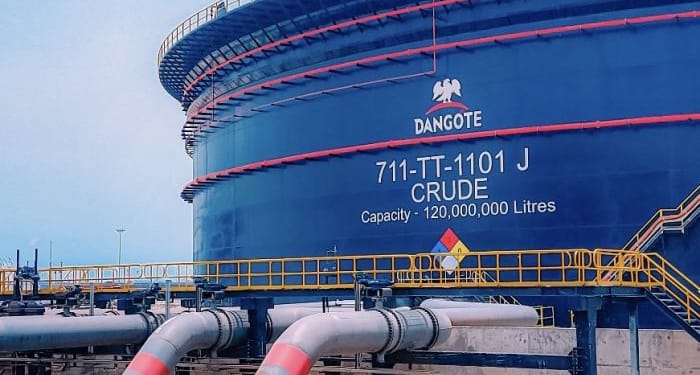
The Dangote Refinery was always described as a game-changer for Nigeria. Nobody predicted it would become a lifeline for the entire continent.
When the US and Israel launched Operation Epic Fury on February 28, striking Iran's military infrastructure and closing the Strait of Hormuz to tanker traffic, the immediate conversation was about oil prices, geopolitics and the Middle East. What received less attention was what was happening quietly, urgently, in government offices from Pretoria to Nairobi.
Africa was running out of fuel, and it had very few places left to turn.
According to the International Energy Agency, about 600,000 barrels per day of petroleum products typically destined for Africa from the Middle East are now at risk, as tanker traffic through the Strait of Hormuz has slowed to a trickle. For some countries on the continent, those cargoes do not supplement demand. They effectively are demand.
No African country is a member of the International Energy Agency, which requires member states to hold at least 90 days of net oil import reserves. That single fact throws the continent's exposure into sharp relief. Many of the countries now scrambling for supply are operating on three weeks of stock. Some on less.
Securing fuel will be harder for developing nations, as richer buyers may be able to outbid them. The IEA, the European Union, Japan and South Korea all have strategic reserves, established relationships with alternative suppliers and the fiscal capacity to pay premium prices in a tight market. African governments have none of these advantages at scale.
Energy consultancy CITAC's Elitsa Georgieva has been warning about this structural dependence for years. The numbers she cited are now unavoidable: the two regions of east and southern Africa receive about 75% of their fuel imports from the Middle East. That is not a supply chain. That is a single point of failure.
Energy experts warn that unless African countries accelerate investments in domestic refining capacity and diversify supply sources, similar shocks could recur with increasing frequency and severity, each time amplifying economic shocks across the continent.
1 Comments
The Structural Lesson Nobody Wants to Learn
No African country is a member of the International Energy Agency, which requires member states to hold at least 90 days of net oil import reserves. That single fact throws the continent's exposure into sharp relief. Many of the countries now scrambling for supply are operating on three weeks of stock. Some on less.
Securing fuel will be harder for developing nations, as richer buyers may be able to outbid them. The IEA, the European Union, Japan and South Korea all have strategic reserves, established relationships with alternative suppliers and the fiscal capacity to pay premium prices in a tight market. African governments have none of these advantages at scale.
Energy consultancy CITAC's Elitsa Georgieva has been warning about this structural dependence for years. The numbers she cited are now unavoidable: the two regions of east and southern Africa receive about 75% of their fuel imports from the Middle East. That is not a supply chain. That is a single point of failure.
Energy experts warn that unless African countries accelerate investments in domestic refining capacity and diversify supply sources, similar shocks could recur with increasing frequency and severity, each time amplifying economic shocks across the continent.