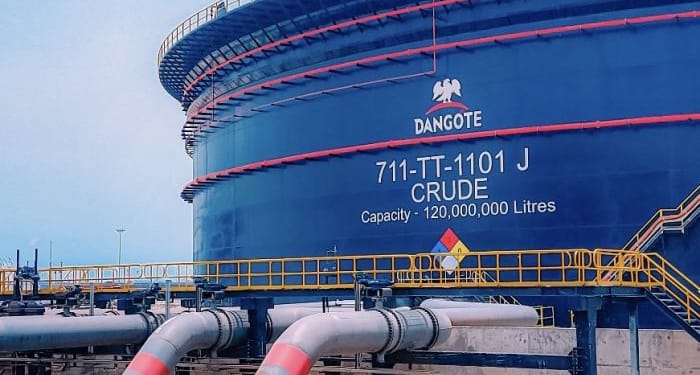
The Dangote Refinery was always described as a game-changer for Nigeria. Nobody predicted it would become a lifeline for the entire continent.
When the US and Israel launched Operation Epic Fury on February 28, striking Iran's military infrastructure and closing the Strait of Hormuz to tanker traffic, the immediate conversation was about oil prices, geopolitics and the Middle East. What received less attention was what was happening quietly, urgently, in government offices from Pretoria to Nairobi.
Africa was running out of fuel, and it had very few places left to turn.
According to the International Energy Agency, about 600,000 barrels per day of petroleum products typically destined for Africa from the Middle East are now at risk, as tanker traffic through the Strait of Hormuz has slowed to a trickle. For some countries on the continent, those cargoes do not supplement demand. They effectively are demand.
The vulnerability is not evenly distributed, but it is alarmingly widespread.
South Africa presents perhaps the starkest case study in how badly this can go. The country has lost about half its refining capacity in recent years after accidents and years of underinvestment left plants unable to meet cleaner-fuel standards. Its remaining refineries meet less than half of 612,000 barrels a day of domestic demand. Saudi Arabia was its second-biggest oil supplier as recently as 2024. The situation has been further complicated by the shutdown of Glencore-owned Astron Energy's 100,000-barrel-a-day Cape Town refinery for maintenance, with production not expected to resume until April.
Jacob Mbele, director-general at South Africa's Department of Mineral Resources, chose his words carefully when speaking to Bloomberg from Cape Town. "We're looking everywhere for supply options," he said. "We're comfortable that in the coming weeks or so, we are safe. The situation is fluid, it changes every day."
"The coming weeks or so" is not a phrase that inspires confidence. South Africa is now seeking a standard 12-month supply contract with Nigeria.
Kenya's situation is more immediately precarious. The country consumes about 100,000 barrels of fuel every day and imports all of it. It requires importers to hold just 21 days of stock, leaving it vulnerable to the loss of even a single shipment. Martin Chomba, chairman of the Petroleum Outlets Association of Kenya, confirmed the strain is already visible at street level. "The biggest suppliers are rationing product, and some distributors are experiencing stock-outs in rural areas," he said.
Ethiopia has moved to demand-side management. Prime Minister Abiy Ahmed has urged citizens to curtail fuel usage, directing available resources toward essential services and emphasising that consumption must now be prioritised for "basic and essential needs." For one of East Africa's largest economies, that is an extraordinary public admission.
1 Comments
Country by Country, the Picture Gets Worse
The vulnerability is not evenly distributed, but it is alarmingly widespread.
South Africa presents perhaps the starkest case study in how badly this can go. The country has lost about half its refining capacity in recent years after accidents and years of underinvestment left plants unable to meet cleaner-fuel standards. Its remaining refineries meet less than half of 612,000 barrels a day of domestic demand. Saudi Arabia was its second-biggest oil supplier as recently as 2024. The situation has been further complicated by the shutdown of Glencore-owned Astron Energy's 100,000-barrel-a-day Cape Town refinery for maintenance, with production not expected to resume until April.
Jacob Mbele, director-general at South Africa's Department of Mineral Resources, chose his words carefully when speaking to Bloomberg from Cape Town. "We're looking everywhere for supply options," he said. "We're comfortable that in the coming weeks or so, we are safe. The situation is fluid, it changes every day."
"The coming weeks or so" is not a phrase that inspires confidence. South Africa is now seeking a standard 12-month supply contract with Nigeria.
Kenya's situation is more immediately precarious. The country consumes about 100,000 barrels of fuel every day and imports all of it. It requires importers to hold just 21 days of stock, leaving it vulnerable to the loss of even a single shipment. Martin Chomba, chairman of the Petroleum Outlets Association of Kenya, confirmed the strain is already visible at street level. "The biggest suppliers are rationing product, and some distributors are experiencing stock-outs in rural areas," he said.
Ethiopia has moved to demand-side management. Prime Minister Abiy Ahmed has urged citizens to curtail fuel usage, directing available resources toward essential services and emphasising that consumption must now be prioritised for "basic and essential needs." For one of East Africa's largest economies, that is an extraordinary public admission.
Sources: House of Commons Library, ABC7 News, Quora, ABC7 News, Al Jazeera, House of Commons Library