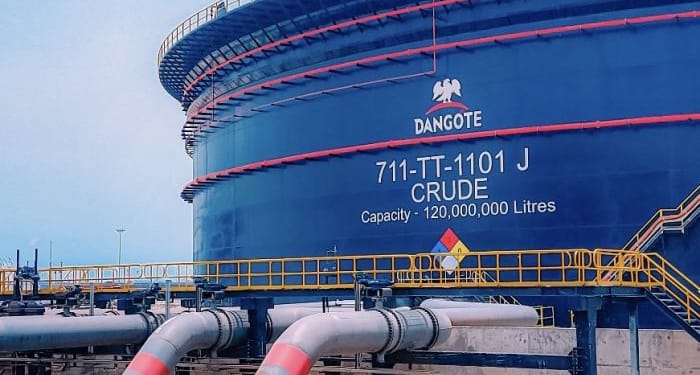
The Dangote Refinery was always described as a game-changer for Nigeria. Nobody predicted it would become a lifeline for the entire continent.
When the US and Israel launched Operation Epic Fury on February 28, striking Iran's military infrastructure and closing the Strait of Hormuz to tanker traffic, the immediate conversation was about oil prices, geopolitics and the Middle East. What received less attention was what was happening quietly, urgently, in government offices from Pretoria to Nairobi.
Africa was running out of fuel, and it had very few places left to turn.
According to the International Energy Agency, about 600,000 barrels per day of petroleum products typically destined for Africa from the Middle East are now at risk, as tanker traffic through the Strait of Hormuz has slowed to a trickle. For some countries on the continent, those cargoes do not supplement demand. They effectively are demand.
To understand why African governments are scrambling, you have to understand what the continent did, or rather failed to do, over the previous two decades.
Africa, which accounts for about 7% of the world's crude output, had seen its refining capacity shrink by about a third in the past two decades before Dangote's facility came online. Refineries that should have been maintained were abandoned. Plants that could have been upgraded were shuttered after accidents or left to decay because they could not meet cleaner-fuel standards. Governments found it cheaper and easier to import refined products from the Persian Gulf than to build and run the infrastructure to produce their own.
The result was a continent deeply vulnerable to exactly what is now happening, a situation where a geopolitical conflict thousands of kilometres away translates almost instantly into economic pressure for African households and governments.
Data from Kpler shows that petroleum product loadings bound for Africa fell sharply from 580,000 metric tonnes in January to just 183,000 metric tonnes in February, a collapse of 68.4 per cent. By March, volumes had plunged to zero, marking a complete breakdown in supply flows within a single quarter.
1 Comments
The Wound Decades in the Making
To understand why African governments are scrambling, you have to understand what the continent did, or rather failed to do, over the previous two decades.
Africa, which accounts for about 7% of the world's crude output, had seen its refining capacity shrink by about a third in the past two decades before Dangote's facility came online. Refineries that should have been maintained were abandoned. Plants that could have been upgraded were shuttered after accidents or left to decay because they could not meet cleaner-fuel standards. Governments found it cheaper and easier to import refined products from the Persian Gulf than to build and run the infrastructure to produce their own.
The result was a continent deeply vulnerable to exactly what is now happening, a situation where a geopolitical conflict thousands of kilometres away translates almost instantly into economic pressure for African households and governments.
Data from Kpler shows that petroleum product loadings bound for Africa fell sharply from 580,000 metric tonnes in January to just 183,000 metric tonnes in February, a collapse of 68.4 per cent. By March, volumes had plunged to zero, marking a complete breakdown in supply flows within a single quarter.
Zero. Not reduced. Zero.